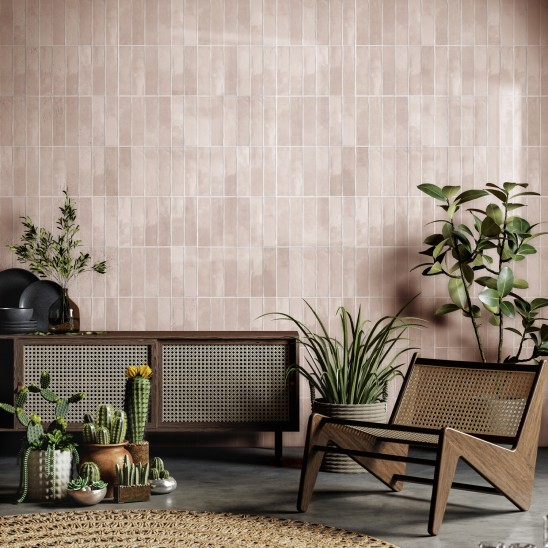
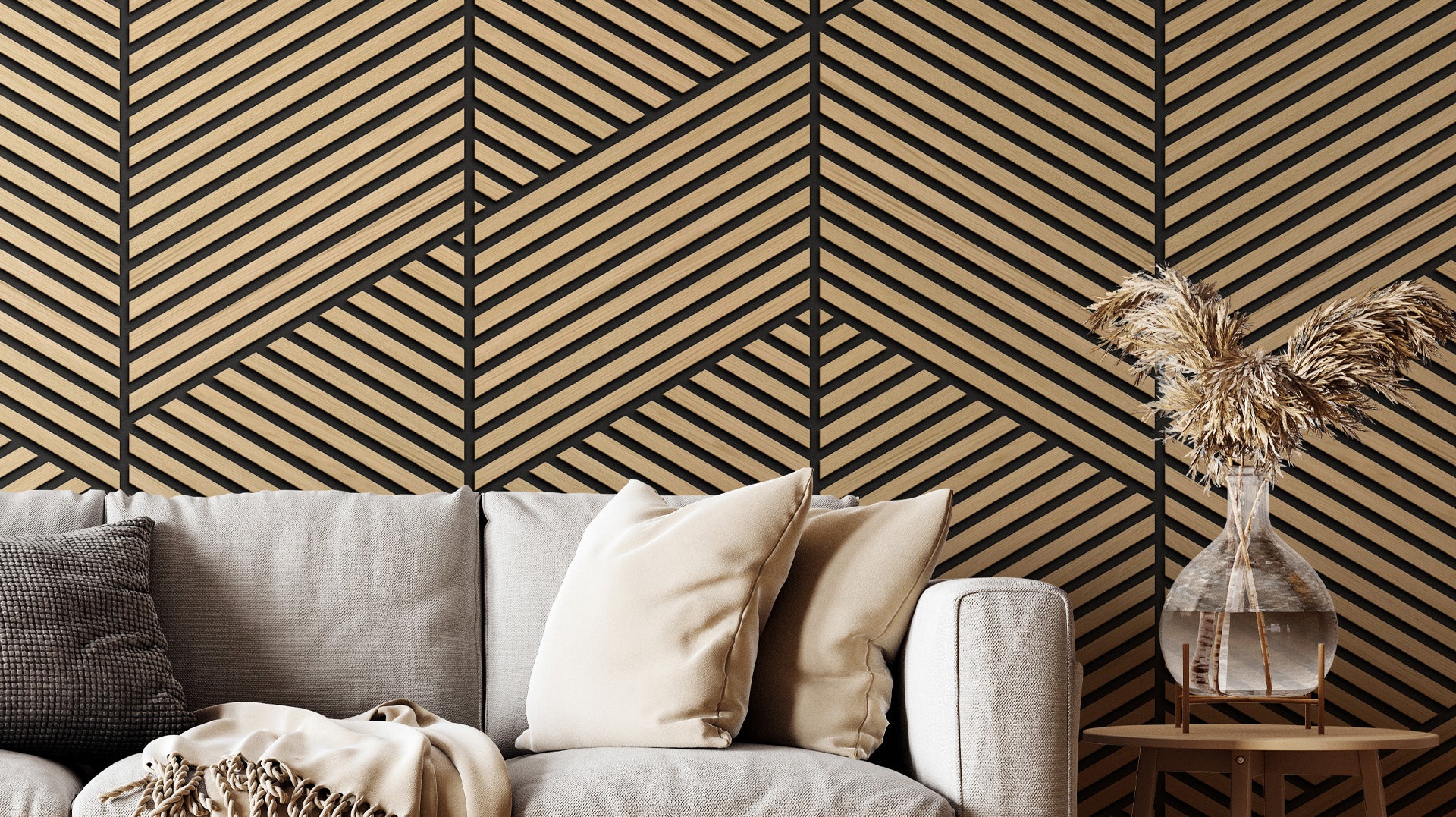
Paint, PVC or compositewall cladding , wallpaper, tiles... There is a wide range of options for decorating kitchen walls. Whether you have a simple kitchenette or a large professional-style kitchen, an open-plan kitchen or a separate kitchen, how do you choose the right cladding the most delicious room in the house? What color should you choose? Bold or timeless shades? cladding , patterned or imitation material cladding ?
Should the splashback match or contrast completely with the wall covering wall
Here are some useful tips for your kitchen design or renovation project.
What wall coverings are possible for a kitchen?
There are many ways to renovate the walls of a room. The kitchen offers a wide range of covering options. Here are a few:
- Paint is the best known and most widely used solution. A variety of colors and effects are possible (subtle or bold shades; satin, matte, patina, or rust effects; sponge painting; magnetic or chalkboard paint, etc.). Applying paint requires the wall to be in good condition wall , if not, to be repaired (removal of cladding , preparation of wall smoothing of the surface, coating, application of paint and finishing, etc.).
- Tiles are generally used on the wall of kitchen units (cabinets, appliances, shelves, etc.). They can cover the entire wall be used only as a backsplash. Laying tiles also requires proper preparation of the wall surface to ensure that the tiles adhere properly. It is possible to cover existing tiles with a paint specially designed for this purpose.
- Wallpaper is now perfectly suited to kitchens thanks to the technical properties of the new ranges. It comes in a variety of decorative styles (tropical, art deco, abstract, baroque, geometric, etc.) and a wide range of colors. There is a huge choice available.
- wall and compositewall cladding can cover a wall or partially. We appreciate how easy it is to install and the fact that no construction work is required. PVC tiles or composite slats can be installed over other cladding wallpaper, tile, paint, or wall with a relief of up to 3 mm). These wall coverings are practical solutions that are also economical. Textured imitation materials are very popular because they look surprisingly realistic (wood, marble, cement tiles, etc.).
Mix of wall coverings in the kitchen
It is possible to mix wall covering solutions wall paint and tile, wallpaper and tile, wallpaper and cladding , etc.
Mixed wall coverings can be used on the same wall for example, PVC slats and paint on a splashback) or on two different walls (composite tiles on one wall and paint on the others).
Mixing materials adds texture and maximum personalization to the kitchen.

If the ceiling in your kitchen is damaged or dirty, you can repaint it or apply PVC paneling for a neat, high-quality finish.

PVC paneling also looks great on the walls of the laundry room or pantry adjoining the kitchen.

PVC paneling also looks great on the walls of the laundry room or pantry adjoining the kitchen.
How to choosewall cladding wall your kitchen?
Whether you choose paint, tile, composite decking, or PVC flooring, it is important to find harmony in the colors used on your walls.
When choosing color tones, consider everything you have available, i.e., your kitchen elements (their material and color), the floor (material and color), furniture such as the table and chairs, and decorative objects you want to incorporate into your dining room.
There is only one requirement: to find chromatic harmony and consistency with the existing elements.
Also take into account the size of your room. If the kitchen is small or lacks light, avoid dark colors, which tend to diminish volume and reduce the feeling of space. Use patterns sparingly so as not to overload the space and make the atmosphere feel heavy. If you fall in love with jungle wallpaper, for example, despite the small size of your kitchen, apply it to the wall to maintain the lightness of the room and choose light colors for your exotic patterns.
Large kitchens allow for more freedom, provided you know how to coordinate colors and materials. Use effects and patterns sparingly. Alternate between busy and plain walls to lighten the atmosphere and highlight only what needs to be highlighted. Painting all the walls of a large kitchen white can make it feel empty. Mix it with other colors and wall coverings.
If your kitchen opens onto the living room, it is important to ensure consistency between the two styles of decoration. A baroque living room will not harmonize with a Provençal-style kitchen.
Some decorative pairings can be quite effective.
For example, mix:
- Industrial furniture with jungle wallpaper
- A wall wood-look PVC tiles, paired with contempory furniture
- A wall stone-effect composite tiles with a wooden kitchen
The subtle, natural colors have the great advantage of matching all materials: cream, ivory, twine, linen, taupe, beige, etc.
White is a must-have; it brightens up a room and makes it look bigger.
Natural shades have been very popular in recent years: ochre, terracotta, rust, almond green, orange, stone gray, etc. They can be paired with furniture of all styles (industrial, rustic, bohemian, ethnic, etc.).
Which backsplash should you choose for your kitchen?
The backsplash can be made of tile, cement tile, waxed concrete, wood, PVC, or composite material. PVC and composite tiles allow for textured imitations and original patterns.
When choosing a backsplash, it should be coordinated with the color of the kitchen walls and the color and material of the furniture elements (cabinets, countertops, cupboard doors).

The backsplash generally measures between 40 and 80 centimeters. It can therefore serve as a partial decorative touch, which is ideal for small kitchens that cannot add too many patterns or effects without making the space feel cluttered and reducing the amount of space available.
The backsplash can also be part of the wall covering wall cover the entire wall space wall the kitchen units. It is then called a "back panel." This means that the backsplash does not end between the upper and lower units.