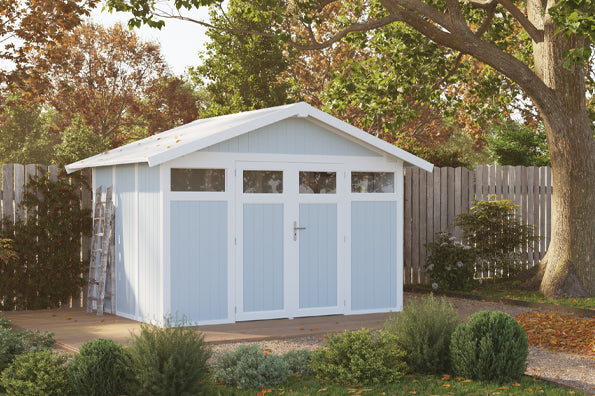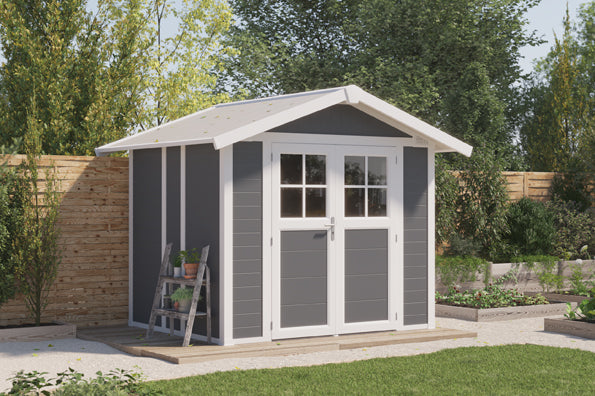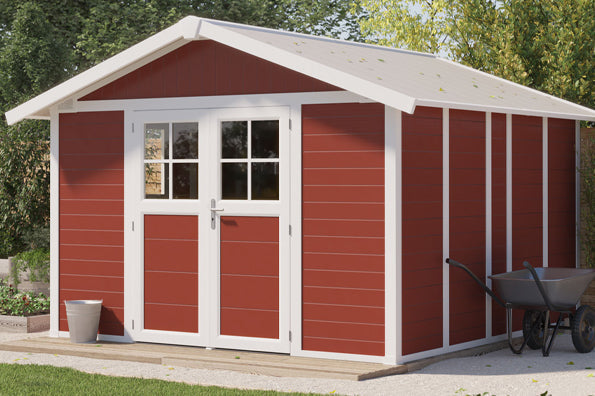
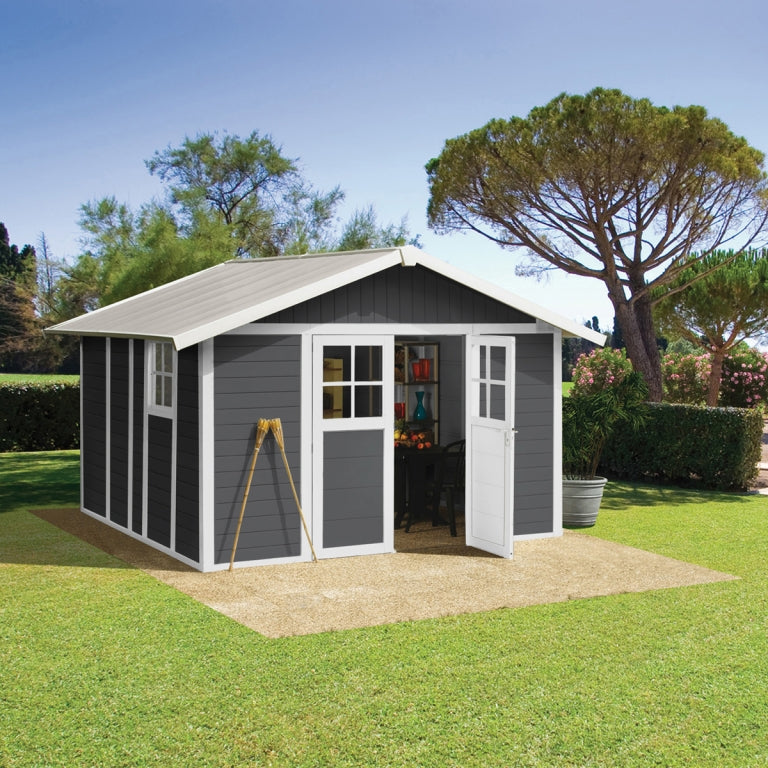

You have just finished installing your garden shed, which will become either your DIY workshop, a storage space, or perhaps even a painting studio. Have you considered all the options and finishes that will ensure it lasts for years to come?
Why protect the bottom of your garden shed?
A garden shed located outdoors, surrounded by greenery and trees and not really protected from the elements, is inevitably exposed to wind, sun, and rain, which can greatly contribute to the accelerated deterioration of your garden shed.
Humidity
To keep your garden shed in perfect condition, it is best to protect the bottom of your garden shed. Moisture can quickly become a major factor in deterioration and attack the walls in contact with the concrete screed or slabs on which your garden shed is fixed.
Water may remain stagnant, leading to the appearance of moss, mold, or other bacteria at the bottom of your garden shed structure.
It is therefore important to pay particular attention to this point, using a few tips that we will mention below.
How can you protect the bottom of your garden shed?
- A concrete slab adapted to the dimensions of the garden shed
Properly sizing your concrete slab is essential for protecting the bottom of your garden shed!
Designed to insulate and prevent water from rising, the concrete slab must be carefully constructed, taking into account the external dimensions of the garden shed.
It is important to note that if your screed or the surface covered by your slabs extends well beyond the outline of your garden shed, you risk triggering the opposite effect and causing runoff water to stagnate, leading to the growth of fungi or moss.
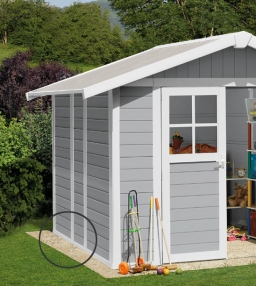
It is therefore best to play it safe and allow for an overlap of 10 to 15 cm on the outside (length, width) of your shed to better protect the bottom of your garden shelter.
- Applying a silicone seal:
The seal applied between the shelter and the concrete slab will reinforce the protection of the bottom of your garden shelter.

Widely used in construction products, this polymer is highly effective at combating moisture. Regardless of the material your garden shed is made of, it will reinforce the waterproofing system between its base and the concrete slab, forming a protective layer that prevents water infiltration.
Beforehand, check that you choose the right silicone that is suitable for outdoor use, can be applied to concrete slabs or screed, and will also adhere to the material your garden shed is made of.
Apply this sealant to the outside of the shelter structure using a special gun. Apply an even layer of sealant that is wide enough to ensure maximum effectiveness.
This sealant offers durability, resistance, andelasticity all at once. An ideal component for combating moisture.
- The gutter
A preventive accessory that complements the work done by the silicone seal, the concrete slab is slightly larger than the surface area of your shelter.
Available in copper, aluminum, zinc, or PVC, you can choose the material that best suits your new garden shelter.
This way, you'll be doing everything you can to protect the bottom of your garden shed!
[pswp_products ids="1003,1004,1017,1021,1023,1024,1045,1050"]